
HOKA Neutral Assistance: The selfless support model that combats dropouts in ultra-trail running
In ultra-distance races, dropping out (DNF) is mainly psychological, a factor exacerbated by the lack of personal assistance for more than half of the participants. To address this issue, HOKA has launched HOKA Neutral Assistance at the UTMB Mont-Blanc. This pilot initiative, based on selfless moral and material support, has been nominated in the Ethical and Environmental Initiative of the Year category at the Trail Running Awards.
The diagnosis: The psychological challenge of ultra-trail running
The UTMB Mont-Blanc served as a testing ground for this initiative, based on a simple yet critical observation: approximately 80% of dropouts in ultra-trail running are attributable to psychological factors (weariness, extreme fatigue) rather than physical failure. This phenomenon particularly affects the more than 50% of runners who tackle the race without their own support team.
The goal of HOKA Neutral Assistance was clear: to reduce the number of DNFs and improve the racing experience in the most difficult conditions by creating a selfless human connection at the heart of the aid stations.
Innovation: Neutral and impartial support
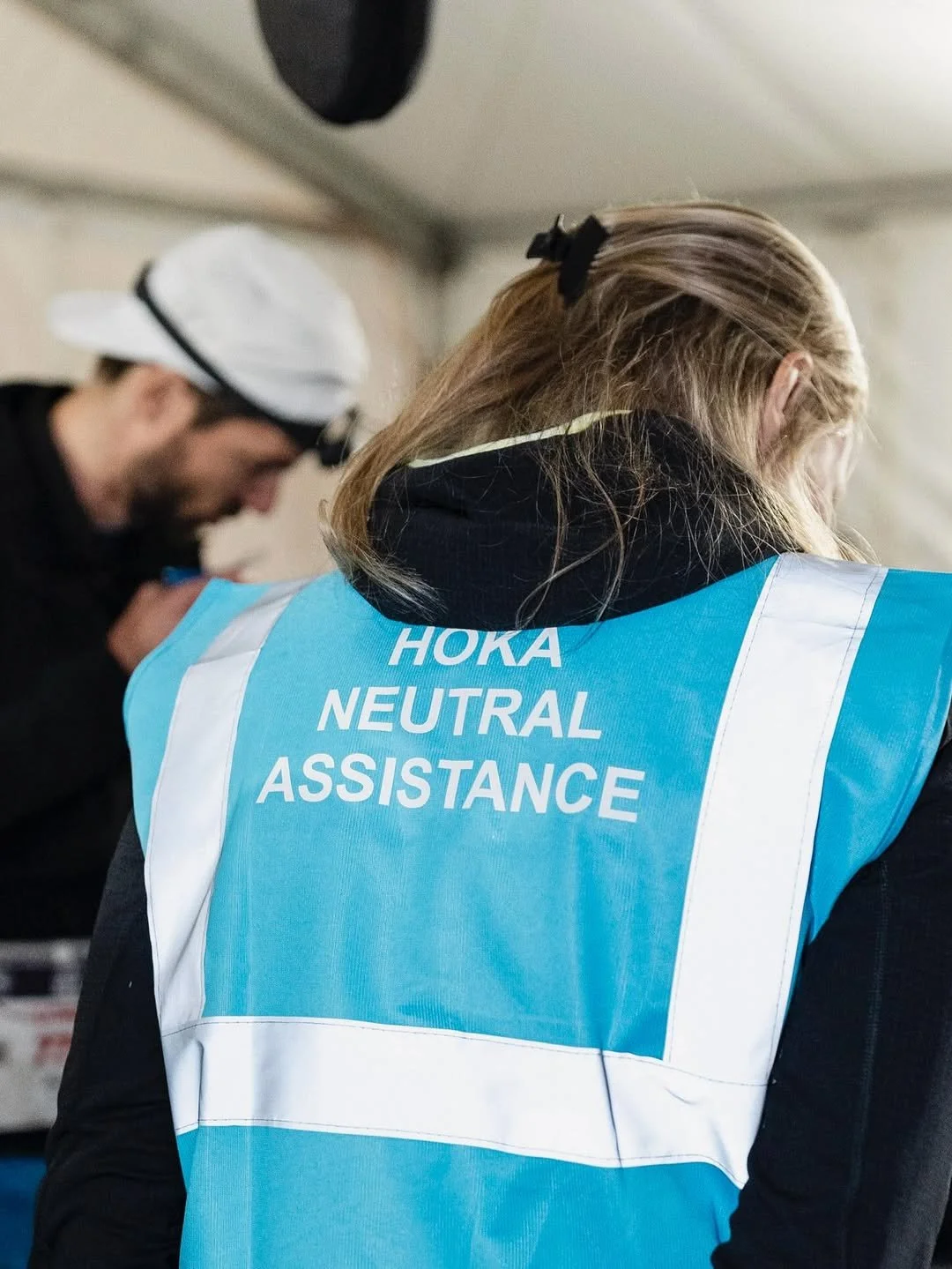
For the first time at a major ultra-trail event, a brand offered neutral, free assistance open to all at an official aid station (Champex-Lac). The initiative was welcomed by the organizers, who nicknamed it the "HOKA ANGELS. "
The support provided focused on three areas:
Moral Support: Support, listening, and re-engagement in the face of mental fatigue.
Equipment Support: Loan of basic equipment (shoes, poles, socks) to runners who did not have their own or in the event of a minor emergency.
Initial Medical Assessment: The team conducted an initial physical assessment and referred runners who really needed it to the Red Cross medical tent, thereby relieving the local medical services.
Jean-Luc Diard, co-founder of HOKA, endorsed the approach: "This idea is exactly what trail running needs. It makes sense, it's selfless, and it perfectly embodies HOKA's place when it comes to giving back to the trail community."
Impact and validation of the model
The pilot program was a huge success with the community. The team interacted with a large number of runners at the refreshment station.
Effectiveness in the field: The local doctor in Champex-Lac saw the system as a valuable and unexpected source of support for the Red Cross. By carrying out an initial triage, the neutral assistance team was able to efficiently direct medical resources to the most urgent cases.
Transformative Impact: Participants' testimonials highlight the decisive impact of the initiative. One Asian participant, who had given up during his two previous attempts, said he was able to finish the race thanks to this unexpected support.
HOKA Neutral Assistance has proven its relevance by providing concrete help to isolated runners and relieving the local medical system, establishing itself as an inspiring model for the future of support in ultra-distance conditions.
