
Oxfam Trailwalker: A model of collective commitment to fighting poverty and inequality
The Oxfam Trailwalker is one of the largest demonstrations of sporting solidarity organized in France. The event stands out for its unique model, in which physical performance is linked to civic engagement: fundraising for Oxfam France. This initiative, which combines adventure, team spirit, and structural social impact, has been nominated in the Social Initiative of the Year category at the Trail Running Awards.
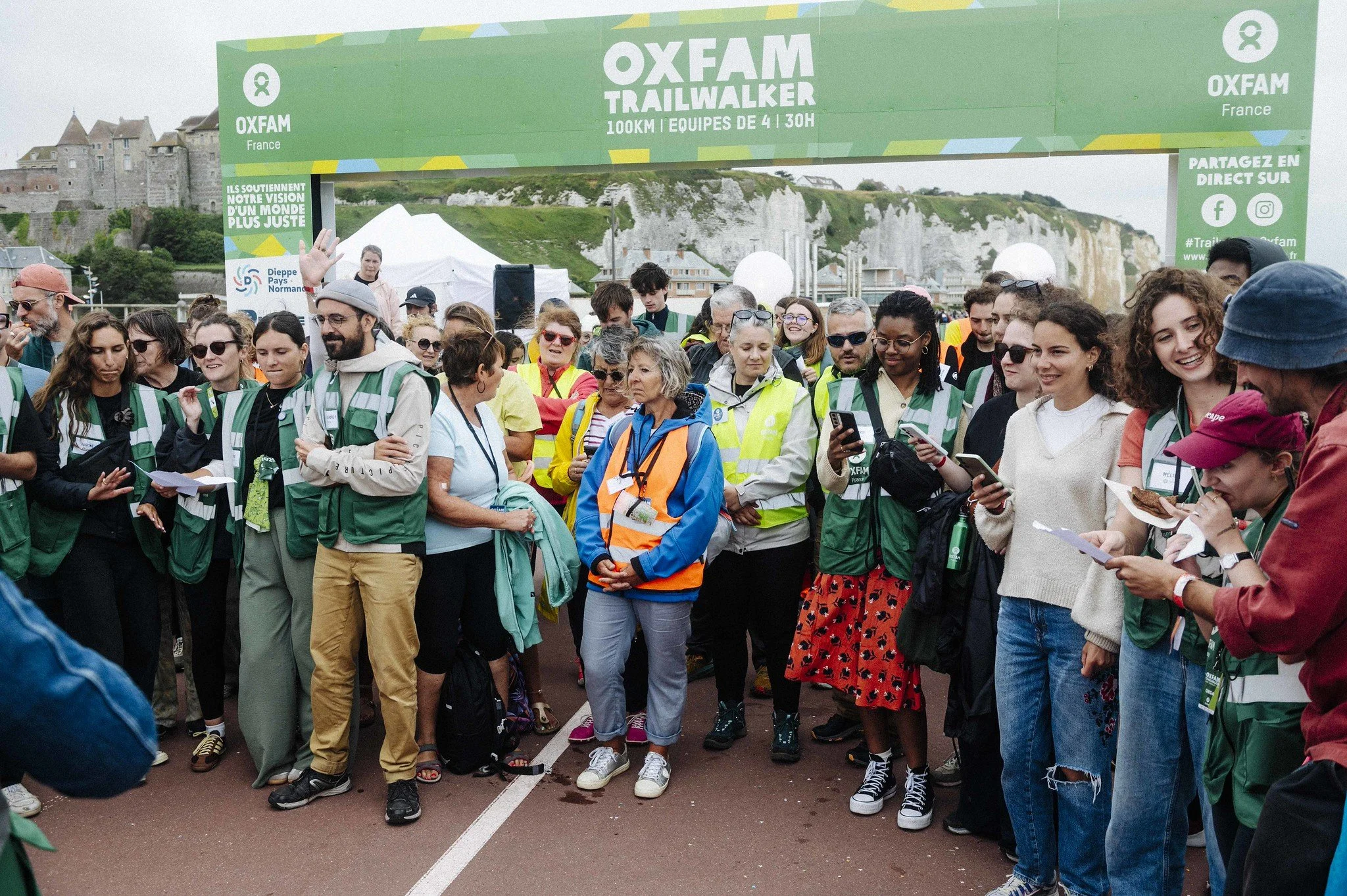
The Model: The dual physical and financial challenge
The Oxfam Trailwalker, which began in 1986, is based on a strong identity of a double challenge. To take part in this non-stop event, each team of four participants must reach a fundraising target that directly finances the NGO's programs to combat poverty and inequality.
Structural commitment: The event is not just a charity race; crowdfunding is mandatory in order to participate. This model ensures that solidarity is intrinsic to the sporting achievement.
Accessibility: In order to open up the challenge to as many people as possible, the event offers adapted routes (a 100 km format without relays and a 50 km route), attracting a mixed and intergenerational community, from Sunday hikers to seasoned athletes.
The event has become Oxfam France's major fundraising event, mobilizing thousands of people every year around a common goal: working together to build a fairer world.
Collective energy: Volunteers, supporters, and communities
The uniqueness of Trailwalker lies in the community it creates. The event transcends individual performance to become a deeply human experience, based on mutual support and cohesion.
The role of volunteers: Each edition brings together around a hundred volunteers and supporters, whose moral and logistical support is crucial. Walkers attest to the energy and kindness of the organization, emphasizing the importance of this "support network" in helping them go "further" together.
Local presence: Trailwalker relies on the essential involvement of local host communities (Nancy, Dieppe), with which the NGO signs long-term agreements, guaranteeing the event's long-term presence in the region and growth in local economic benefits.
Renewal: The event strives to renew the experience (for example, a night start for the 50 km course for the 2026 edition), seeking to reinforce the collective and memorable nature of the experience.
Impact and validation of the solidarity model
The Oxfam Trailwalker has demonstrated its ability to generate a stable and growing financial impact for the benefit of Oxfam's programs.
Loyalty: The event is characterized by strong loyalty among teams and volunteers, proving the quality of the experience and the appeal of this dual commitment.
Visibility: Collective mobilization generates constant media visibility in the regional and national daily press.
Commitment: Participants, whose satisfaction levels are very high, become ambassadors for the cause, sharing the experience as an extraordinary and deeply enriching challenge.
Trailwalker thus creates a sustainable, mixed-gender, intergenerational community that mobilizes to fund social and environmental justice programs, proving that another model of civic engagement through sport is possible.
